
Article
Morocco at WUF13: Berkane Smart City and the Future of Territorial Innovation
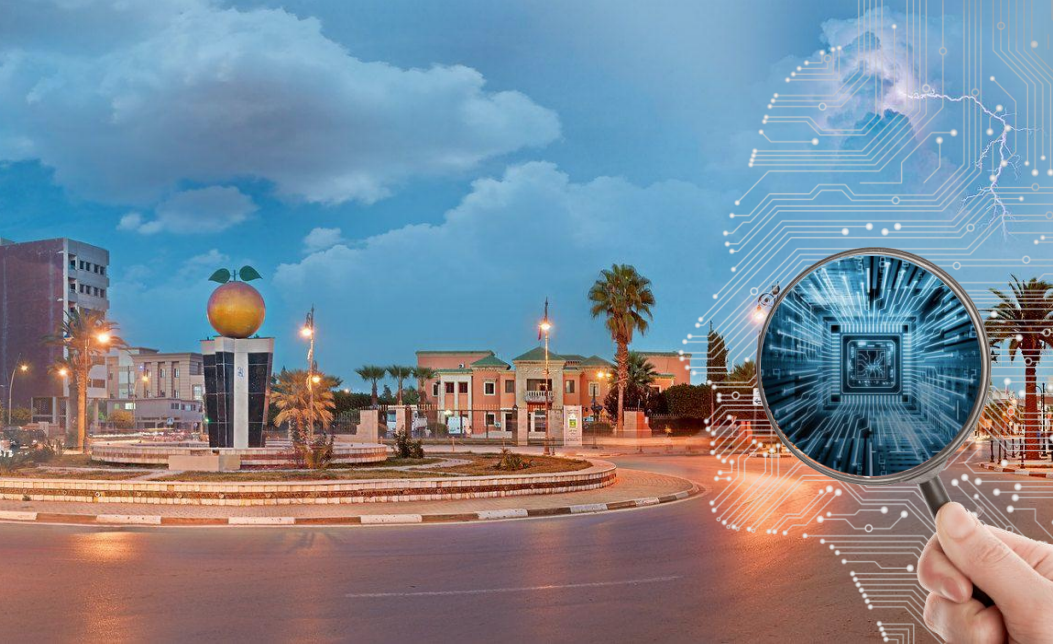
As cities around the world face growing pressures linked to urbanization, climate change, resource management and digital transformation, the question is no longer whether territories should evolve, but how they can evolve intelligently, inclusively and sustainably.
At the 13th session of the World Urban Forum (WUF13) in Baku, Azerbaijan, Morocco’s participation reflects this global transition through several initiatives focused on urban resilience, territorial governance and smart city development. Among the most notable examples presented is the Berkane Smart City initiative, an evolving ecosystem that illustrates how territorial innovation can support sustainable urban development in emerging contexts.
Organized under the framework of UN Habitat and the New Urban Agenda, WUF13 brings together governments, urban institutions, researchers, development agencies and practitioners from around the world to discuss the future of cities and human settlements. In this international context, Morocco’s experience offers an interesting perspective on how territorial planning, digital governance and cooperation across actors can converge toward smarter and more resilient urban systems.
From Smart Cities to Smart Territories
The Berkane Smart City initiative goes beyond the traditional vision of “connected cities.” Rather than focusing solely on technology, the project emphasizes territorial governance, operational coordination and sustainable urban management.
The initiative involves a broad ecosystem of actors, including:
- The Ministry of National Territory Planning, Urban Planning, Housing and City Policy (MATNUHPV)
- Wilaya and local territorial authorities
- Urban Agency of Oujda (Agence Urbaine d’Oujda)
- Regional Investment Center of the Oriental Region (CRI Oriental)
- Universities and engineering schools
- Technical and innovation partners
This approach involving many actors reflects an important evolution in urban governance: cities and territories can no longer be managed through isolated institutions working independently. Urban resilience increasingly depends on integrated cooperation between planning authorities, digital operators, public institutions, researchers and local stakeholders.
Digital Transformation as a Territorial Tool
One of the most interesting aspects of the Berkane Smart City approach is the integration of digital tools into territorial management and public services.
The initiative explores multiple operational use cases, including:
- Smart waste management systems
- Digital governance platforms
- Intelligent transportation management
- Biodiversity monitoring
- Territorial data integration
- Urban digital twins
- Connected public services
These technologies are not presented as isolated innovations, but as components of a broader governance model aimed at improving urban efficiency, sustainability and citizen services.
This approach aligns strongly with current global discussions around smart governance and resilient urban systems, particularly within the framework of the Sustainable Development Goals (SDGs).
Planning, Resilience and Sustainability
A central dimension of Morocco’s urban transition is the relationship between territorial planning and resilience.
In many rapidly urbanizing regions, urban growth often occurs faster than infrastructure adaptation and environmental integration. This creates vulnerabilities related to energy consumption, mobility, housing quality and exposure to climate risks.
The Moroccan experience presented through initiatives such as Berkane Smart City highlights the importance of integrating planning, environmental considerations and digital tools from the early stages of territorial development.
This includes:
- Better coordination between planning and infrastructure
- Optimized land use
- Integration of environmental data
- Support for sustainable mobility
- Anticipation of urban risks
- Improved access to services
Rather than treating resilience as a response after crisis, the approach increasingly positions resilience as a planning principle embedded within territorial governance itself.
A Transferable Governance Ecosystem
One of the strongest aspects of the Moroccan approach is its potential transferability.
The value of the initiative does not lie in replicating Berkane exactly elsewhere, but in demonstrating how different actors can collaborate within a shared territorial innovation framework.
The combination of:
- Institutional coordination,
- Digital transformation,
- Urban planning,
- Local governance,
- Academic involvement,
- And operational experimentation
creates a model that may inspire other cities and regions facing similar urban pressures.
This is particularly relevant for territories in Africa and the Global South, where cities must often address rapid urbanization while balancing sustainability, affordability and governance capacity.
Morocco’s Evolving Urban Vision
Morocco’s participation at WUF13 reflects a broader transformation in the way urban development is approached.
The discussion is progressively moving:
- From isolated projects to integrated territorial systems,
- From reactive urban management to anticipatory governance,
- And from traditional infrastructure planning toward data informed and resilient territorial strategies.
In this context, initiatives such as Berkane Smart City illustrate how local experimentation can contribute to larger international conversations about the future of cities.
As urban challenges become increasingly interconnected, the future of sustainable development may depend less on individual technologies and more on the capacity of territories to organize knowledge, institutions, planning and innovation within coherent governance ecosystems.
WUF13 offers precisely this kind of space for dialogue, where local experiences can become part of a global reflection on resilient, inclusive and sustainable urban futures.